Public and private articulation: a conversation about combating violence against women and the importance of the "No Means No" protocol
According to the Anuário Brasileiro de Segurança Pública, released in 2023, that compares data from the previous year to 2021, Brazil witnessed an increase of 49.7% in reports of sexual harassment cases and 37% in cases of sexual misconduct. The percentage is significant and raises the alarm for the need for awareness, discussion, and better handling of cases of violence against women. Given this scenario, at the end of 2023, Federal Law No. 14,786 was enacted, instituting the "No Means No" protocol with the aim of combating embarrassment and violence against women.
In March, BMA organized a series of roundtable discussions of this extremely relevant topic, for employees, clients, and guests. In São Paulo, the event featured speakers Vanessa Almeida, Prosecutor from the Public Prosecutor's Office of the State of São Paulo (MP-SP), and Mariana Pimentel, Legal Director at Pernod Ricard. In Rio de Janeiro, Andrea Martins, President of PMI Worldwide Latam, and Marcia Fernandes, Public Administration Specialist and Advocate for the Women's Rights Defense Unit, were the invited speakers.
The Importance of Addressing the Topic
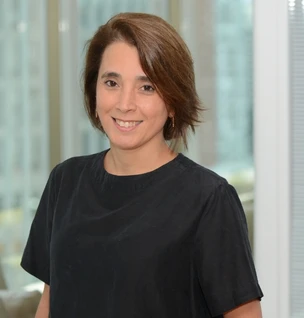
In São Paulo, Cibelle Linero, our Employment partner and member of the BMA Women and BMA Diversity Committees, opened the discussion by introducing the guests and discussing the difficulty of choosing a topic to address during Women's Month, given the complexity of issues and important agendas surrounding the female universe that deserve attention. Subsequently, Vanessa Almeida, prosecutor from MP-SP, began her speech by emphasizing the importance of bringing visibility to the issue of violence against women, which has seen a significant increase in reports of sexual harassment and sexual misconduct cases in recent years.
Given this context, Vanessa explained the importance of the "No Means No" protocol, sanctioned on 11/28/2023, by President Luiz Inácio Lula da Silva, whose purpose is to combat embarrassment and violence against women in places such as nightclubs, bars, restaurants, music venues, and similar establishments. However, she emphasized that the protocol is an important step in combating violence against women, but there is still much to be done regarding the discrediting of victims at the time of reporting incidents, the objectification of women in bars and nightclubs, how this work should extend to men who, in the vast majority of cases, are responsible for the violence, as well as the importance of continuous analysis of the relation between alcohol consumption and the increase of violence.
Expanding on this point, Mariana Pimentel, Legal Director at Pernod Ricard, shared the work that the company, from the alcoholic beverage industry, has been doing with its members and strategic business partners to fulfill its role in combating violence against women. She explained that Pernod Ricard's concern goes beyond the physical boundaries of the organization, which regularly conducts anti-violence training for all its members, especially leaders and managers who carry the responsibility of cascading knowledge, and extends to the company's supplier chain, which, in addition to not closing contracts unless they have diversity and non-violence policies, also receive training to work at events in nightclubs and festivals, for example.
To wrapp up the conversation, Igor Silva de Lima, our Corporate and M&A partner, emphasized how important it is to discuss this issue with decision-makers and the importance of men also engaging in the fight to eradicate violence against women. For him, it is essential that, in addition to becoming aware of their privileges in society, men educate themselves about sexist behaviors, often passed down from generation to generation, and actively take a stand against violence by repressing sexist comments and intervening to ensure the safety of women in vulnerable situations.
Violence against women does not discriminate class or race; it can affect anyone.
In Rio de Janeiro, our event was hosted by Camila Chouzal, Corporate and M&A partner and member of BMA Women Committee. Camila opened the discussion by listing the cases of harassment and rape that have gained national attention recently, such as those involving Brazilian soccer players Daniel Alves and Robinho. She also spoke about the resolution of Marielle Franco’s case, a woman from a marginalized community in a position of power, and the urgency of discussing the "No Means No" protocol and laws that protect women.
Next, Marcia Fernandes, a Specialist in Public Administration and Advocate for the Women's Rights Defense Unit, began her speech by stating that the Women's Rights Defense Unit has been in existence for 27 years and serves all women in vulnerable situations, not just those who are economically disadvantaged, because violence against women does not discriminate by class or race; it can affect anyone. According to her, what caused surprise and criticism in the Law that instituted the Protocol was a single paragraph that excluded religious establishments.
Marcia addressed the principles of the "No Means No" protocol, the commitment to it, and the approach to be taken. According to her, it is necessary to take women who are victims of abuse or harassment to reserved places and offer them full support, and then offer possibilities such as calling the police, a family member, or taking the woman who is a victim of violence to the hospital, etc. The Protocol states that every establishment must have an incident book - if the woman decides not to take any action, the establishment is committed to this chain because it must record everything.
"We have a social commitment, a governmental commitment. And if we have all of this, it's because women were bothered and created this space. The Maria da Penha Law, for example, is very good because it was written by those who will use it. We have to use our voice."
Andrea Martins, President of PMI Worldwide Latam, divided her speech into three topics she considers indispensable to be addressed when it comes to violence against women: "statistics, intention, and responsibility."
She says that statistics don't lie - 30% of women in Brazil have already suffered some form of domestic violence. The first Salary Transparency Report released by the Ministries of Women and Labor and Employment, reports that women's salaries are 20% lower than men. Furthermore, she emphasized the fact that the country's largest newspapers are repeatedly reporting cases of violence against women. "We can say whatever we want, but the statistics of our country are this."
The second point is intention. She provokes reflection on "What can you do in the position you are in today to prevent violence against women?", with the aim of raise understanding that no matter the size of the impact a person will cause, what matters is making an impact. On that occasion, she brought a real example about the difficulty of hiring a female director for the sales department, an area usually dominated by men, but how it was important to make the gender requirement to have a qualified woman in that leadership position.
The third point is responsibility. She comments that conscious decisions are fundamental to transform reality. She mentioned the example that a woman can decide to only frequent bars with the "woman-friendly" seal. "I invite everyone to do what they can and what they can in their space."
By exploring this urgent debate, the roundtable discussions provided a deep reflection on the importance of public and private articulation and the active participation of both men and women to promote a society that truly respects women.